
The Best Strategic Thinking I Do All Year Happens in June
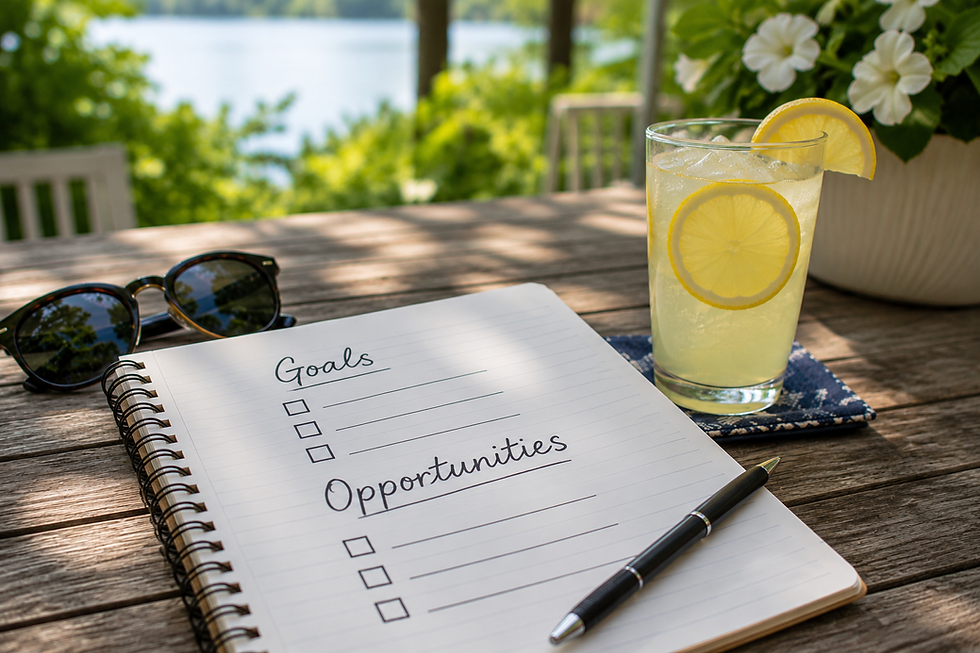
As spring gives way to summer, something interesting happens to our calendars.
The major initiatives that kicked off in January have matured. Some projects have wrapped up. Others are gearing up for a fall launch. Calendars open up slightly as vacations begin. The pace doesn't necessarily slow down, but it changes.
And I think that's a gift.
For me, this time of year has become less about pushing harder and more about pausing intentionally.
January is for setting goals. June is for deciding which goals still matter.
I've learned that some of my best strategic thinking doesn't happen at the beginning of the year when goals are fresh. It happens in June, when I have enough experience, enough wins, and enough mistakes to know what really matters.
Am I making progress on the goals I set in January? If not, why?
What have I learned in the first half of the year that I want to carry forward?
Where have I grown? And where do I still have work to do?
Summer is also a wonderful time to invest in yourself. There are conferences to attend, books to read, webinars to join, and new skills to build. Even something as simple as taking a self-assessment or seeking feedback can uncover opportunities for growth that are easy to miss during busier seasons.
But perhaps the most valuable exercise for me is evaluating the systems and habits behind the work.
Where did my processes begin to fray?
I've found that the small disciplines are often the first to slip when things get busy—and they're also the habits that create the biggest difference over time.
And if I'm being honest, I've seen that in myself this year.
A meeting without an agenda here. Notes I promised myself I'd send but delayed. A project where I was so focused on execution that I forgot to revisit the goals I established at the outset.
None of these things were catastrophic.
But leadership isn't usually won or lost in grand moments. It's built in the small disciplines we practice consistently.
That's why I use this season to revisit those fundamentals. Sending agendas and notes. Reviewing project goals. Assessing what has been achieved, what is still in progress, and where additional attention is needed.
I also ask myself a harder question:
What am I tolerating that I know I should improve?
A process that no longer works?
A habit that's become inconsistent?
A conversation I've been avoiding?
An opportunity to learn that I've postponed?
Small adjustments now can prevent bigger problems later.
And that is what I love most about this season.
It's not about slowing down.
It's about creating enough space to think strategically.
To celebrate progress honestly.
To identify what needs improvement.
And to make intentional choices about how to finish the year strong.
The calendar may say we're halfway through the year.
But in many ways, this is where the next chapter begins.
How do you use this time of year? Do you push ahead at full speed, or do you build in time for reflection and recalibration?


Comments